www.irishbeans.com
Colouring
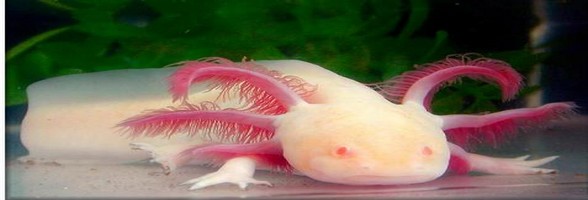
Nowadays, thanks to the lab experiments, axolotls come in many colour variations and different patterns. Its natural colour is rather greyish brown, sometime with a greenish tint. Over the years of genetic breeding of dominant and recessive alleles determining the colouring, the following colour forms have been achieved that can be seen in axolotls in the larval stage. The appearance of an adult axolotl differs somewhat from the individual before the metamorphosis; and I presume that your axolotl has not reached its adulthood yet but it’s still in the larval stage.
-
White albino with red eyes
-
White albino with black eyes
-
Golden or yellow axolotl
-
Black or brown of various shades
-
Speckled axolotl known as the harlequin (orange and black patches on a white axolotl)
It does not make any difference whether your pet axolotl is a male or a female. Its colouring may be slightly influenced by the environment, such as the dark or light bottom of the aquarium, where on the dark background the salamander will have darker colour than another one kept on the light background. The colour of your pet’s skin may also influence the live food you serve it; for example the bloodworms with its specific vitamin content. Also the spawning can bring about more vivid coloration.